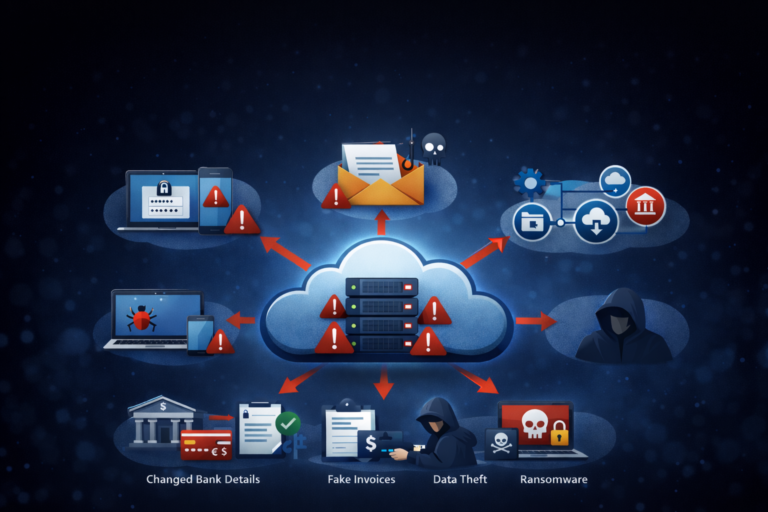
Accurate bookkeeping is not about ticking a box for your accountant. It is about protecting every pound you work so hard to earn. When you do not track your finances properly, money leaks out in ways you never see until it is painful.
If you run a small business, your small business bookkeeping habits decide whether you sleep well or lie awake worrying about cash. You are either in control of your numbers or reacting to surprises. There is no middle ground for long.
At SW Accounts Limited, we see this every week. Founders come in convinced they have a sales problem. Once we look at the numbers, it is nearly always a finance visibility problem. The good news is that it is fixable. The bad news is that the longer you leave it, the more it quietly costs.
What running a business without proper records really looks like
Messy business bookkeeping never starts as a disaster. It starts with one month where you do not reconcile the bank, or you forget to file some receipts, or you tell yourself you will “catch up later”.
Then it turns into this:
- You guess what is in the bank instead of knowing.
- You avoid looking at your accounting software because it feels stressful.
- You rely on your online banking app as your main “report”.
- You are not sure who still owes you money.
- You cannot say, with confidence, if you are actually profitable.
If this sounds familiar, you are already paying the price of poor bookkeeping and accounting. You just have not put a number on it yet.
Real-world examples you might recognise
Simple basic bookkeeping gaps often show up first as small annoyances, then as very real money losses.
A trades business keeps working flat out but leaves invoicing until the end of the month. Jobs get missed, quotes never become invoices, and late payments stack up. By the time they speak to us, they have thousands of pounds of completed work that never made it onto a sales report.
An online retailer pays for ads, stock, and shipping but does not track profit by product. Because their online accounting data is patchy, they keep promoting items that actually lose money after fees. A few months of this quietly wipes out the margin from their bestsellers.
What the usual advice gets wrong about bookkeeping
Most guides about bookkeeping services repeat the same safe lines. They tell you that good books help with taxes, make cash flow clearer, support business decisions, and keep you compliant. All of that is true.
Those articles usually cover:
- A definition of bookkeeping and accounting.
- Legal and tax obligations.
- How clean records help with cash flow.
- Why lenders and investors like tidy numbers.
- A light pitch for their bookkeeping services for small businesses.
What they rarely do is show you hard numbers for the hidden cost of doing it badly. They talk about “risk” and “potential penalties”, but not about what it really means for your salary, your stress levels, or your growth over the next three years.
They also skip the messy reality you live with daily: late nights chasing invoices, HMRC letters you do not fully understand, and staff asking questions you cannot answer because the data is out of date.
The gaps that most competitor articles leave wide open
Most content on the importance of small business bookkeeping misses some key realities.
They rarely talk about:
- The cost of your own time when you DIY the books instead of focusing on sales.
- The impact of wrong prices and unprofitable jobs because your numbers being out of date.
- How bad data quietly kills your valuation when you want to raise funding or sell.
- The mental load of always feeling behind on money.
- The fact that accounting software alone does not fix broken habits.
They also tend to push “do it yourself with software” without explaining the learning curve, the risk of errors, or when it is smarter to outsource bookkeeping to a specialist who does this all day.
That is where this guide is different. You will see how not tracking your finances shows up in your bank account, not just in theory.
The visible costs you already feel when you ignore your numbers
Strong bookkeeping and tax services save you from obvious, painful costs. You may already know some of these, even if you have not added them up yet.
Late fees, penalties, and interest
Poor records often mean late VAT returns, missed PAYE deadlines, or wrong submissions. You pay penalties, interest, and sometimes professional “rescue” fees to clean up the mess. Many firms charge significantly more to fix a year of chaos than to keep things tidy every month.
UK businesses are required to keep adequate records for taxes like VAT, corporation tax, and payroll, and HMRC can and does issue penalties when records and returns are wrong or late.
Cash flow crunches that were avoidable
Weak business bookkeeping services mean you do not see cash problems early. You might:
- Pay suppliers before chasing old invoices.
- Run payroll before checking if clients have paid.
- Take drawings based on gut feel, not hard numbers.
The result is that you hit the overdraft more often, pay bank charges, and lose sleep, even though the business is busy on paper.
Poor tax planning and missed reliefs
Without proper records, you hand your accountant a pile of statements once a year and hope for the best. That makes real tax planning almost impossible.
You risk:
- Missing allowable expenses because receipts are lost.
- Claiming reliefs late or not at all.
- Paying more corporation tax or income tax than needed.
All because the data is not there in time.
The hidden costs that quietly drain your profit
The biggest danger is not the obvious fines. It is the compound effect of dozens of small, hidden costs that strong bookkeeping services would prevent.
Underpricing and unprofitable work
Accurate online accounting gives you clear margins by product, project, or client. When your books are out of date, you guess.
That leads to:
- Quoting based on what competitors charge, not your real costs.
- Keeping loss-making products because “they seem popular”.
- Saying yes to work that keeps the team busy but not profitable.
Over a year or two, this kills more businesses than one bad month ever will.
Decisions made on old or wrong data
If you only see accounts once a year, you drive with last year’s map. You might hire too early, commit to a big lease, or cut marketing that was actually working.
Timely online bookkeeping gives you near-real-time data. Without it, you rely on gut feel. Sometimes you will be right. Over time, the bad calls add up, and the good ones are not enough to cover them.
Slower growth and missed opportunities
Time is your most valuable resource as an owner. When you handle your own books at night or on weekends, you are not selling, leading, or improving systems.
Many owners we meet spend 8 to 10 hours a month on admin they hate. If your time is worth even £75 per hour, that is £600 to £750 a month in lost opportunity, before you even consider mistakes.
By contrast, predictable monthly bookkeeping services from a specialist usually cost less than what you are silently burning in wasted time and bad data.
Weaker borrowing power and valuation
Banks and investors care about clean numbers. Messy books mean:
- Slower loan decisions or declined applications.
- Lower valuations when you want to sell.
- Extra questions, extra stress, and less favourable terms.
Solid accounting services for small businesses turn your numbers into an asset, not a liability.
Stress, burnout, and constant background worry
This one never appears on spreadsheets, but it matters. When you avoid your numbers, every bill or HMRC envelope feels like a threat.
Owners tell us they:
- Put off opening post.
- Feel a knot in their stomach when staff ask, “Can we afford this?”
- Avoid holidays because “no one else understands the finances”.
Good bookkeeping services for small businesses do more than tidy entries. They give you confidence. That confidence changes how you show up with your team, with customers, and at home.
Why strong bookkeeping is the foundation, not admin
Solid bookkeeping and accounting services underpin every smart business decision you make. Without them, you are gambling.
Bookkeeping vs accounting in plain language
Think of basic bookkeeping as capturing the story. Every sale, every bill, every payroll run gets recorded clearly and accurately. Think of accounting as using that story to plan, forecast, and decide.
If the story is wrong or incomplete, your accountant is forced to guess. That means your forecasts, budgets, and tax planning all sit on shaky ground.
Why does your accountant struggle if the books are weak
Many owners look for an accountant for a small business near me, and then hand over a mess once a year. The accountant does their best, but they are fixing history, not shaping your future.
When your books are late or inaccurate:
- Year-end accounts take longer and cost more.
- Advice is based on old information.
- You only talk to your adviser when something is already on fire.
When your online accounting services run each month smoothly, your accountant can focus on deeper advice: pricing, structure, tax strategy, and growth.
DIY, software, or pro support: which route actually works
Modern tools make online accounting look easy. A few clicks, connect the bank, job done, right. In reality, the tool is only as good as the person setting it up and using it.
The problem with “I will just do it myself.”
DIY feels cheaper at first. You avoid paying for bookkeeping services, and you tell yourself you are staying close to the numbers.
The reality:
- You learn from your own books, with real money at stake.
- You rely on templates and forums, not tailored advice.
- You get stuck on tricky entries and park them “for later”.
- You keep everything in your head, so you cannot easily hand it off.
Why software is helpful but not a full solution
Cloud tools and cloud-based accounting platforms are brilliant when used properly. Systems like Xero bookkeeping, QuickBooks bookkeeping, and Sage Business Cloud Accounting handle a lot of heavy lifting, from bank feeds to automated rules.
But they still need:
- Correct setup for VAT, payroll, and the chart of accounts.
- Regular checks so errors do not snowball.
- Someone who understands both the software and the tax rules.
Many rescue jobs we see started with good software, but weak processes and no review.
DIY vs in-house vs outsourcing: a simple comparison
If you are deciding between doing it yourself, hiring staff, or using outsourced bookkeeping services, this simple view helps.
| Approach | Best for | Real cost | Main risks |
| DIY with spreadsheets | Very small startups with almost no transactions | Your time every week, plus higher year-end fees | High error rate, no audit trail, hard to scale |
| DIY with software and online bookkeeping | Small businesses with some finance skills and time | Software subscription plus your time | Wrong setup, hidden compliance issues, slow decision-making |
| Hire an in-house bookkeeper | Larger teams with complex operations | Salary, pension, software, training, cover for sickness and holidays | Hard to recruit and retain, key person risk |
| Outsource bookkeeping to a firm like SW Accounts Limited | Busy owners who want expert support and clear reporting | Predictable bookkeeping pricing each month, often less than the value of your own time | You still need to provide information on time and stay engaged |
For most growing service businesses, smart bookkeeping packages with a specialist give the best balance of cost, control, and expertise.
What modern, smart bookkeeping looks like in practice
Modern cloud bookkeeping is not about stacks of paper and end-of-year panic. It is about fast, simple flows that keep your numbers current with minimal effort.
Joined up tools instead of scattered spreadsheets
A strong setup often combines:
- Cloud software for online bookkeeping for small businesses.
- Bank feeds and card feeds for live data.
- Apps to capture receipts from your phone.
- Clear, simple workflows for approvals and payments.
This is where tools like Xero bookkeeping, QuickBooks bookkeeping, and Sage Cloud Accounting shine. They give you clean data with less manual typing, so you and your adviser can focus on the story behind the numbers, not data entry.
Real-time visibility for better decisions
With proper online bookkeeping services, you can see:
- Who owes you money and how long they have owed it.
- Which clients or products are most profitable?
- How much cash is genuinely free to withdraw?
- Whether you can afford that hire or a new office.
This gives you confidence to invest in growth instead of holding back because “you are not sure”.
Joining up payroll, tax, and bookkeeping
When payroll and bookkeeping services sit in one joined-up process, you avoid awkward surprises.
Good systems make sure:
- Payroll journals hit the right accounts automatically.
- VAT, PAYE, and other taxes are tracked throughout the year.
- Cash is ring-fenced for future tax bills.
That keeps both HMRC and your team happy.
Where AI and automation fit in
There is a lot of noise right now about AI bookkeeping and automated finance tools. Used properly, automation is incredibly useful. Used blindly, it simply helps you make mistakes faster.
Smart automation in online accounting services for small businesses should:
- Suggest categories but still allow human review.
- Flag odd transactions or unusual patterns.
- Reduce manual typing, not remove human judgment.
At SW Accounts Limited, we see automation as a way to free time for better conversations, not to replace them. You still need someone who understands your business, not just your software.
How SW Accounts Limited typically helps clients stop the leaks
If you are searching for a bookkeeper near me or a specialist who really understands founders, you usually want more than just tidy books. You want someone who spots problems early and speaks plainly.
A firm like SW Accounts Limited will normally:
- Review your existing data and fix core issues first.
- Move you onto robust, cloud-based accounting tools if needed.
- Design simple processes, so you know exactly what to send and when.
- Provide regular management reports, not just year-end accounts.
- Join up tax and bookkeeping, so surprises are rare.
For many clients, this feels like lifting a weight off their shoulders. They finally know where they stand, what they can pay themselves, and what is possible over the next 12 months.
Simple 4-step action plan to get back in control in 30 days
You do not need to become an accountant. You just need a clear, focused plan for your small business bookkeeping.
Step 1: Face the numbers you have
Gather bank statements, invoices, receipts, and any reports from your current system. Do not worry if it looks messy. The aim is to see the full picture, not to judge yourself.
Make a quick list of:
- How far behind the books are?
- Any letters from HMRC or your accountant you have been avoiding?
- Key questions you cannot answer today, like “what did we actually make last month?”
Step 2: Decide on your future setup
Look honestly at your time, skills, and appetite.
Ask yourself:
- Do I genuinely have time for weekly simple bookkeeping for small business tasks?
- Do I enjoy it enough to do it well?
- Would my time be better spent winning and serving clients?
For many owners, the honest answer is that their time is far more valuable elsewhere. That is the first sign it is time to bring in bookkeeping services.
Step 3: Choose your partner and tools
If you decide to outsource, speak to a firm that understands accounting services for small businesses and works with modern tools.
Discuss:
- Which systems do they recommend, from Xero bookkeeping or QuickBooks bookkeeping to Sage Online Accounting?
- How they handle online bookkeeping services and secure document sharing.
- What is included in their monthly bookkeeping services, and where the boundaries sit.
Look for clear pricing, clear processes, and a focus on practical advice, not jargon.
Step 4: Make bookkeeping a weekly habit, not a yearly panic
Even with strong bookkeeping services for small businesses, you still have a role.
Each week:
- Send or upload receipts and invoices.
- Check who still owes you money and follow up.
- Look at one or two key numbers: cash in the bank, aged debtors, and profit this month so far.
Each month, spend an hour with your reports or your adviser. Ask tough questions. Challenge costs. Decide on one small action that moves profit or cash in the right direction.
Conclusion
Ignoring your numbers feels cheaper in the short term. In reality, it is often the most expensive choice you can make.
The hidden cost of not tracking your finances includes:
- Higher tax and compliance costs.
- Avoidable cash flow crises.
- Underpriced work and silent losses.
- Slower growth and weaker valuations.
Constant stress and decision fatigue.
The fix is not complicated. Strong bookkeeping, modern tools, and experienced support change everything.
If you want to protect your profit, pay yourself confidently, and grow on purpose, treating your business bookkeeping as non-negotiable is one of the smartest moves you can make.
You do not have to do it alone. But you do have to start.